Community
Learn networking, security, and more from our guides and tutorials.
Featured Articles
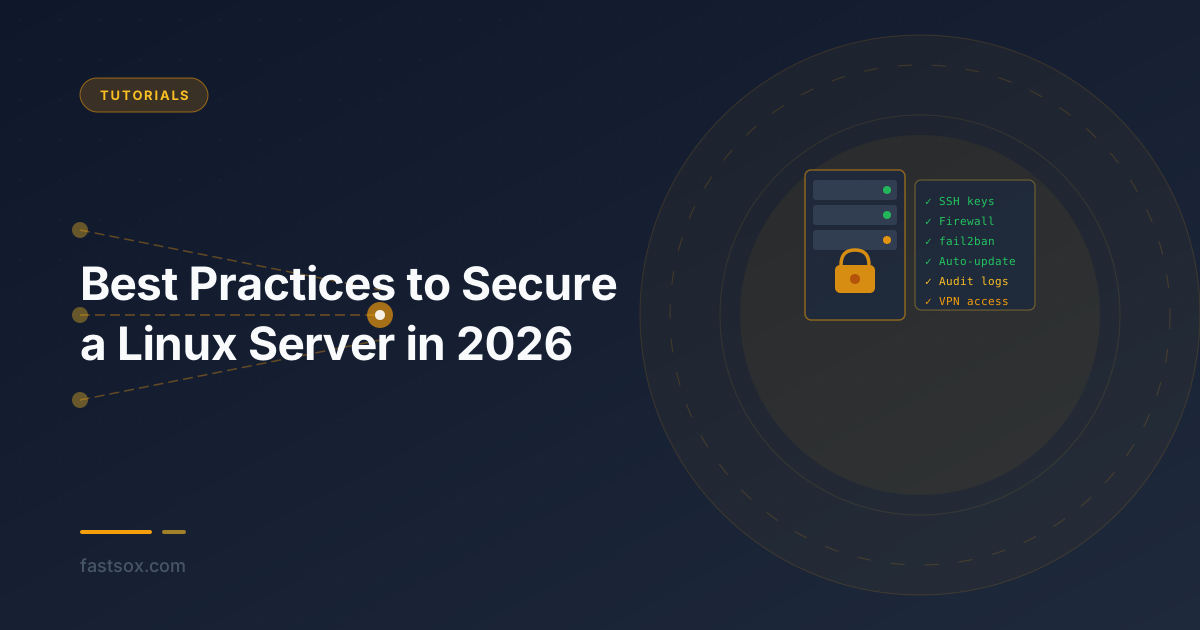
Best Practices to Secure a Linux Server in 2026
A comprehensive, checklist-style guide to hardening a Linux server in 2026. Covers SSH hardening, firewalls, fail2ban, automatic updates, user management, kernel sysctl tuning, file system security, audit logging, and VPN-only management access.

How to Use Claude Code, Codex CLI, and Gemini CLI Without Geo-Restrictions Using FastSox
Claude Code, OpenAI Codex CLI, and Google Gemini CLI are geo-restricted in many regions. This guide shows three practical methods to route your terminal's AI traffic through FastSox — system-wide VPN, WireGuard split tunnel, and SOCKS5 proxy.

How FastSox Helps You Connect to Any AI Service
AI tools like ChatGPT, Claude, Gemini, and Midjourney are geo-restricted in many regions. Learn how FastSox's Smart Mode and HyperSox protocol give you seamless, private access to every AI service.
How to Use WireGuard on Linux: From Installation to Multi-Peer Setup
A practical, step-by-step guide to installing WireGuard on Linux, generating keys, configuring a server and multiple clients, and verifying your tunnel — plus tips on troubleshooting common issues.

How to Optimize TCP Traffic on Windows and Linux
A practical guide to tuning TCP congestion control, buffer sizes, and MTU on both Linux and Windows — so your VPN or proxy connection reaches its full potential.
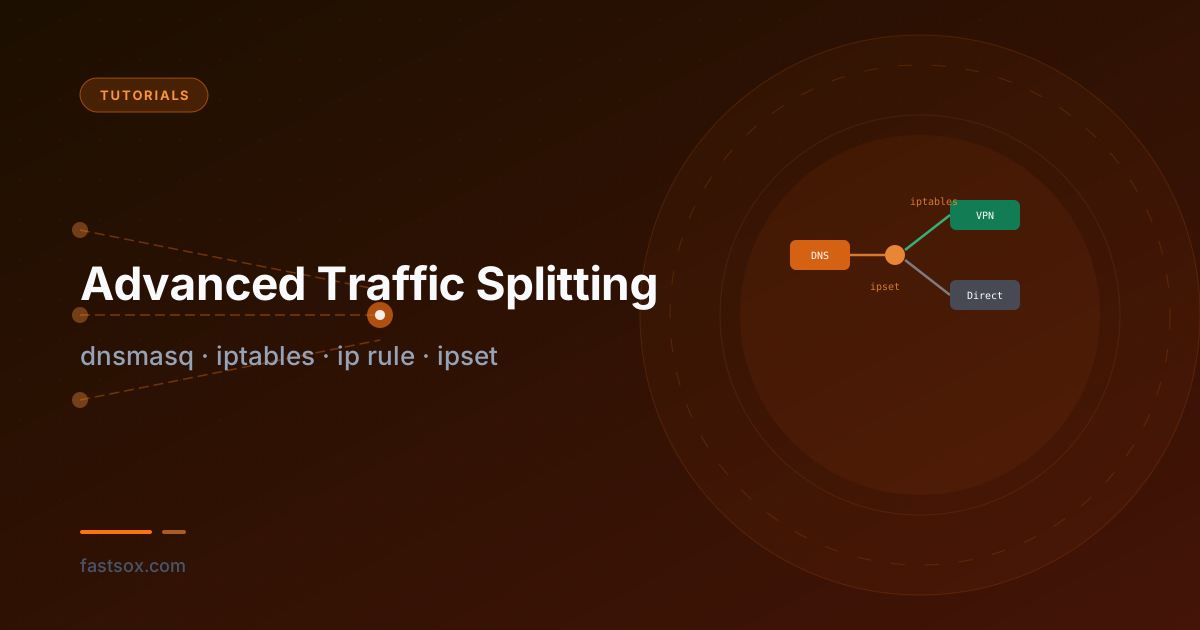
Advanced Traffic Splitting: dnsmasq, iptables, ip rule, and ipset
A technical deep-dive into domain-based split tunneling on Linux — no custom kernel modules, no userspace proxies. Route specific domains through a VPN while keeping everything else direct, using dnsmasq, ipset, iptables marks, and policy-based routing.
How to Use Claude Code, Codex CLI, and Gemini CLI Without Geo-Restrictions Using FastSox
Claude Code, OpenAI Codex CLI, and Google Gemini CLI are geo-restricted in many regions. This guide shows three practical methods to route your terminal's AI traffic through FastSox — system-wide VPN, WireGuard split tunnel, and SOCKS5 proxy.
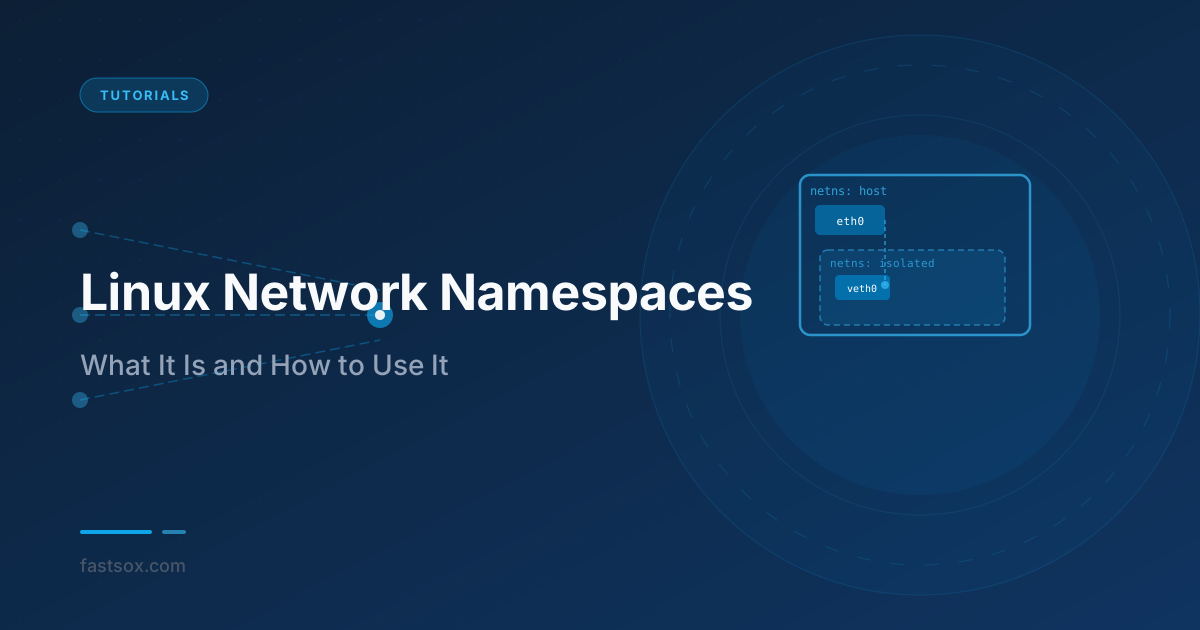
What Is Linux Network Namespace and How to Use It
Learn how Linux network namespaces work, how to create and manage them with iproute2, and how they power container networking, VPN traffic isolation, and multi-tenant gateway infrastructure.
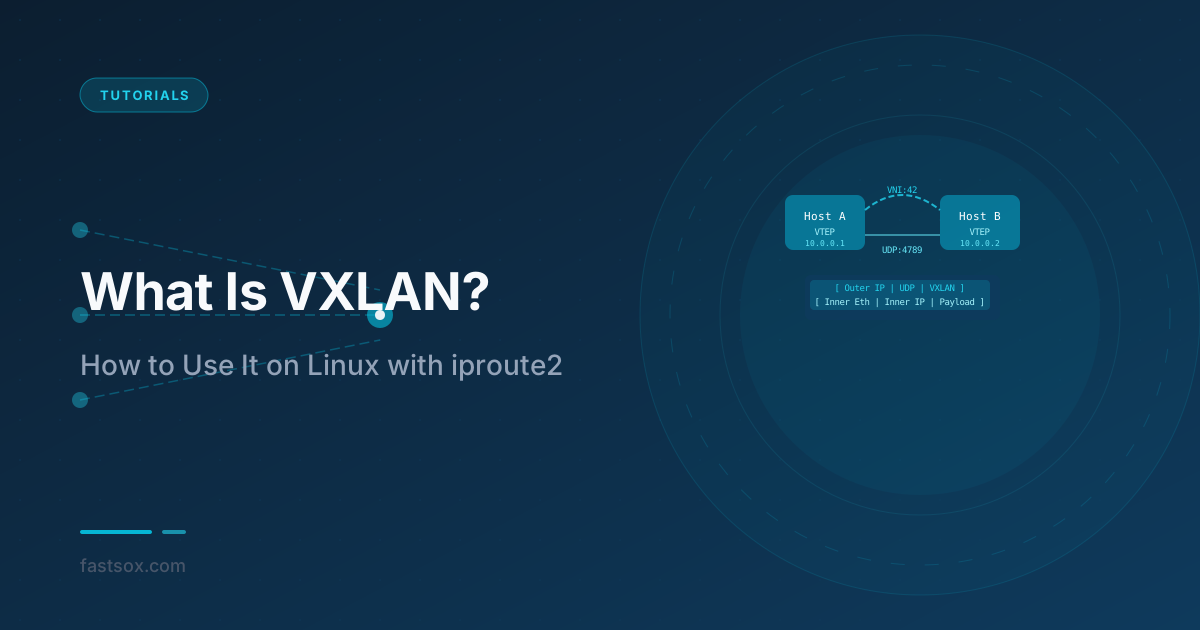
What Is VXLAN and How to Use It on Linux with iproute2
A complete guide to VXLAN: how it solves VLAN exhaustion and enables multi-tenant overlay networks, plus practical step-by-step iproute2 commands for setting up point-to-point tunnels, static FDB entries, and bridge integration on Linux.
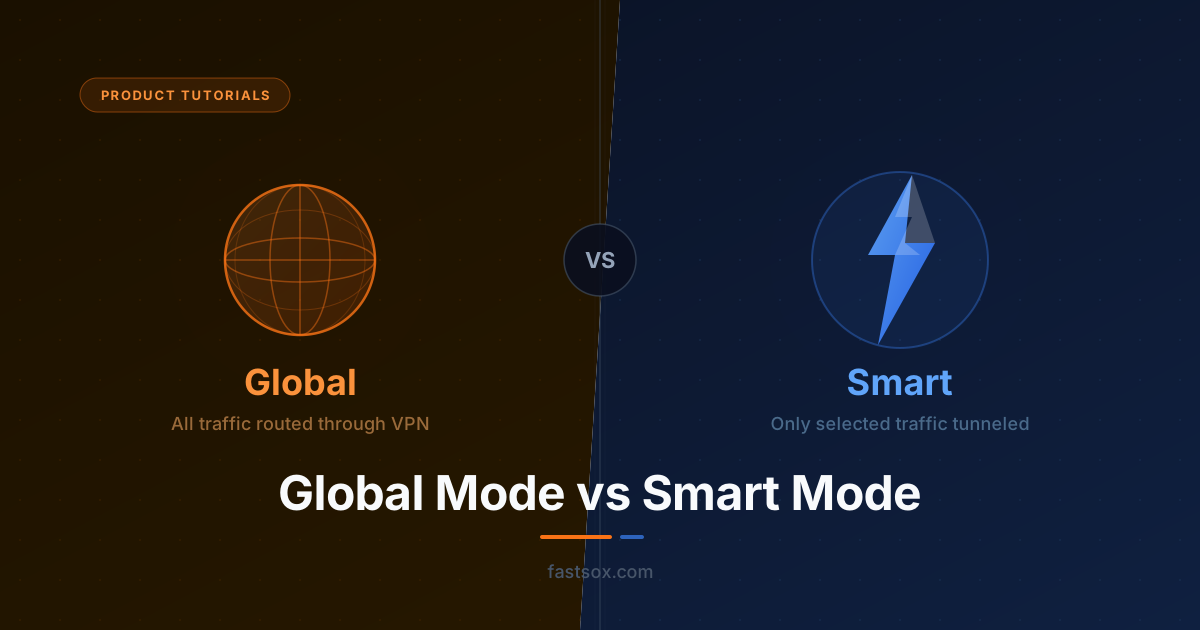
Global Mode vs Smart Mode: Which Should You Use?
FastSox offers two routing modes: Global Mode routes all traffic through the VPN, while Smart Mode intelligently routes only what needs protection. Learn when to use each.
How FastSox Helps You Connect to Any AI Service
AI tools like ChatGPT, Claude, Gemini, and Midjourney are geo-restricted in many regions. Learn how FastSox's Smart Mode and HyperSox protocol give you seamless, private access to every AI service.

What is HyperSox Protocol? A Technical Deep Dive
HyperSox is FastSox's next-generation encrypted proxy protocol built in Rust. Learn how it combines ChaCha20-Poly1305 encryption, X25519 forward secrecy, REALITY TLS obfuscation, and uTLS browser fingerprint spoofing.
What is a VPN? A Complete Guide
Understand how Virtual Private Networks work, why they matter for your privacy, and how modern protocols like WireGuard and HyperSox are redefining online security.

Getting Started with FastSox
Create your account, download the app, and establish your first secure connection in under 5 minutes. A complete walkthrough for new FastSox users.